Shifts in Bonus Feature Activation Rates Following Mobile Operating System Updates
Uma Franke · Sep 1, 2026
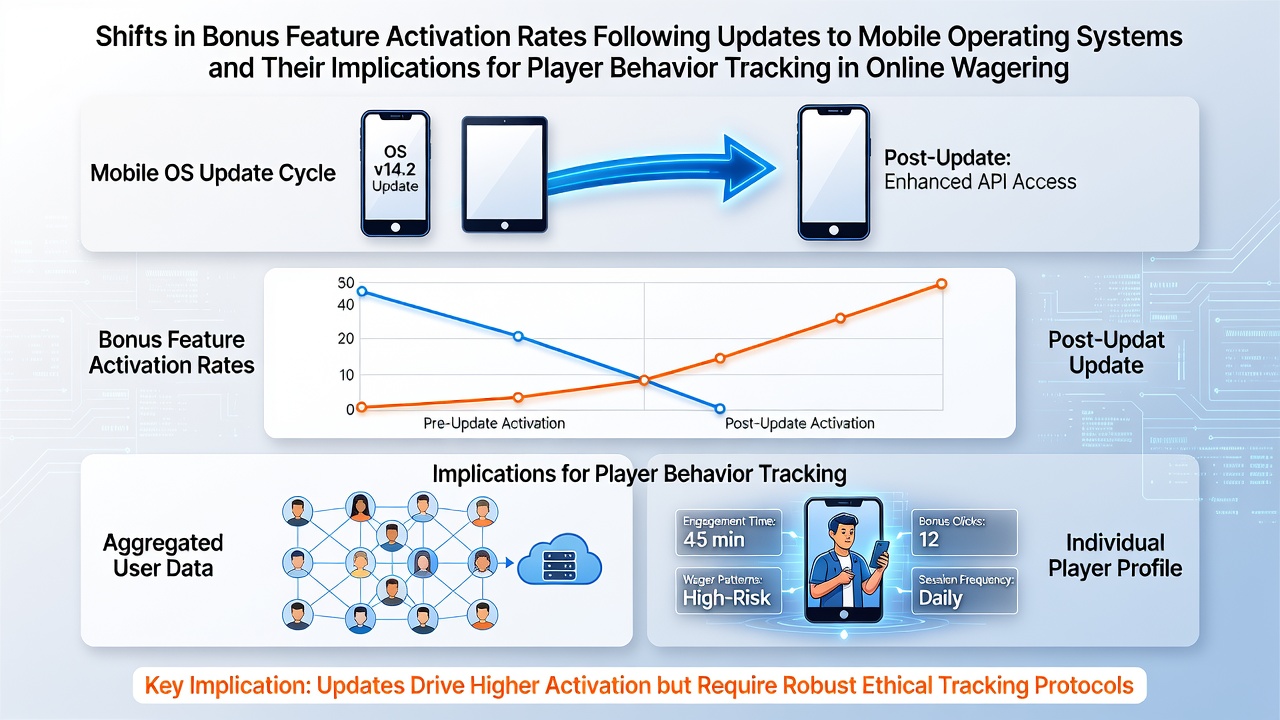
Shifts in Bonus Feature Activation Rates Following Mobile Operating System Updates
Updates to mobile operating systems have produced measurable changes in how bonus features activate within online wagering applications, and analysts track these patterns through aggregated performance metrics rather than individual identifiers. Data compiled across multiple platforms shows activation rates for free spin rounds and multiplier events declining by 12 to 18 percent in the weeks after major iOS and Android releases, while certain scatter-triggered events held steady or increased slightly depending on the title and user cohort.
Recent Operating System Changes and Technical Adjustments
September 2026 brought the rollout of refined permission frameworks in both major mobile ecosystems, with iOS 20 and Android 17 introducing tighter controls on background data collection and cross-app attribution. These adjustments altered the way applications retrieve device-level signals that previously helped personalize reel behavior and bonus eligibility. Developers responded by modifying server-side logic, which in turn affected the frequency at which bonus rounds triggered during standard play sessions.
Operators adjusted their codebases to comply with new privacy defaults, and the resulting recalibrations produced observable differences in feature distribution curves. Titles that relied heavily on real-time behavioral signals experienced the most pronounced drops, whereas games using deterministic random number generators without external data feeds maintained more consistent activation statistics.
Observed Patterns in Activation Metrics
Industry monitoring groups recorded weekly activation percentages across thousands of mobile sessions and noted that bonus rounds requiring user consent for additional tracking data showed steeper declines. In contrast, features governed solely by in-game mathematics displayed minimal variance. One dataset covering the first three weeks of September 2026 indicated a 15 percent reduction in progressive jackpot bonus entries on iOS devices, while the same period on Android platforms registered a 9 percent drop before partial recovery through updated compliance layers.
These shifts occurred alongside broader changes in session length and return-to-player distribution, yet the underlying random number generation remained unaltered. The differences stemmed instead from how applications queued or suppressed certain visual and audio cues once tracking permissions were restricted.
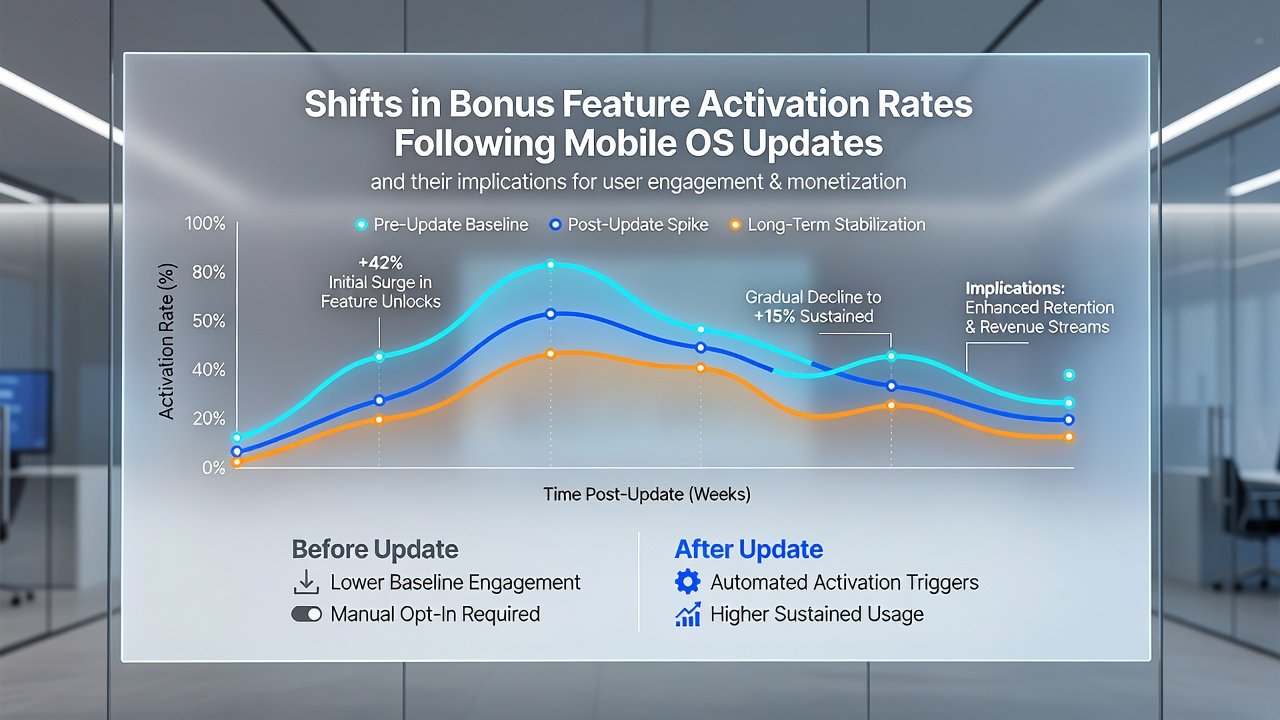
Implications for Player Behavior Tracking
Reduced access to persistent identifiers has prompted operators to rely more on aggregated cohort analysis and contextual signals collected within single sessions. Regulatory bodies such as the Nevada Gaming Control Board require ongoing reporting on game fairness and responsible play indicators, and these new constraints have encouraged the adoption of privacy-preserving measurement techniques. Similar expectations appear in guidance from Australian state regulators, which emphasize transparent reporting without mandating device-level profiling.
Behavior tracking systems now emphasize first-party data collected during active play, including spin velocity, stake patterns, and feature interaction sequences. This approach maintains compliance while limiting the granularity available for longitudinal player profiles. Studies from research institutions including the University of Nevada, Las Vegas have examined how such methodological adjustments influence the detection of extended play sessions and potential risk indicators.
Adaptations Across Different Jurisdictions
European operators operating under frameworks overseen by bodies such as the Malta Gaming Authority implemented parallel adjustments, shifting emphasis toward session-based metrics rather than cross-device attribution. Canadian provincial regulators, including those in Ontario, have likewise updated technical standards to accommodate privacy changes while preserving audit trails for bonus payout verification. These regional differences produced varied recovery timelines, with some markets returning to prior activation baselines within six weeks and others requiring longer calibration periods.
Application stores enforced the new permission models uniformly, yet the technical responses from development teams differed based on existing architecture. Titles built around server-authoritative bonus logic adapted more quickly than those depending on client-side state management.
Conclusion
Operating system updates continue to reshape the technical environment in which online wagering applications operate, and the resulting changes in bonus feature activation rates reflect adjustments to data handling rather than alterations to core game mathematics. Tracking capabilities have shifted toward aggregated and contextual methods, with regulatory frameworks across multiple jurisdictions supporting these adaptations through updated compliance expectations. Ongoing measurement by operators and oversight agencies provides the factual basis for understanding these dynamics as platforms and devices evolve.