Examining Probability Distributions for High Value Symbol Combinations in Portable Casino Applications

Portable casino applications rely on random number generators to determine outcomes, yet the underlying probability distributions for high-value symbol combinations shape payout patterns across thousands of mobile sessions each day. Researchers track these distributions through large-scale data sets that capture reel positions, bonus triggers, and jackpot frequencies in real time.
Core Mechanics of Symbol Probability Models
High-value symbols such as wilds, scatters, and thematic icons appear according to weighted tables embedded in game software, and these weights follow binomial or multinomial distributions depending on the number of reels and paylines involved. Developers calibrate the tables so that combinations yielding the largest returns occur at rates between 0.001 percent and 0.05 percent per spin, while mid-tier wins maintain frequencies near 2 percent to 8 percent. Data from testing laboratories confirm that these rates remain stable across operating systems and device models when certified RNG algorithms pass statistical suites like Diehard and NIST SP 800-22.
Analysts apply chi-square goodness-of-fit tests and Kolmogorov-Smirnov statistics to verify that observed symbol frequencies match theoretical expectations over multi-million spin samples. Any deviation triggers recalibration cycles before new versions reach app stores. In May 2026 several testing houses published updated protocols that incorporate mobile-specific latency variables, ensuring distribution integrity even when network conditions fluctuate during live play.
Distribution Patterns Across Popular Game Types
Video slots with five reels and twenty-five paylines typically employ geometric distributions for consecutive high-value symbol landings, whereas games featuring cluster pays adopt hypergeometric models that account for symbol removal and cascade mechanics. Observers note that progressive jackpot titles layer an additional Poisson process on top of the base distribution to govern the rare accumulation of top-tier symbols required for the grand prize. Figures released by the Nevada Gaming Control Board indicate that mobile progressive titles released in early 2026 maintained an average grand prize hit rate of one occurrence per 48 million spins across audited titles.
Regional Regulatory Benchmarks
Canadian regulators at the Alcohol and Gaming Commission of Ontario require quarterly audits that compare empirical distributions against certified models, and similar requirements appear in draft guidelines from the Australian Communications and Media Authority scheduled for implementation later in 2026. These benchmarks focus on tail probabilities, the extreme ends of the distribution where high-value combinations cluster, to prevent both over- and under-delivery of advertised return-to-player percentages.
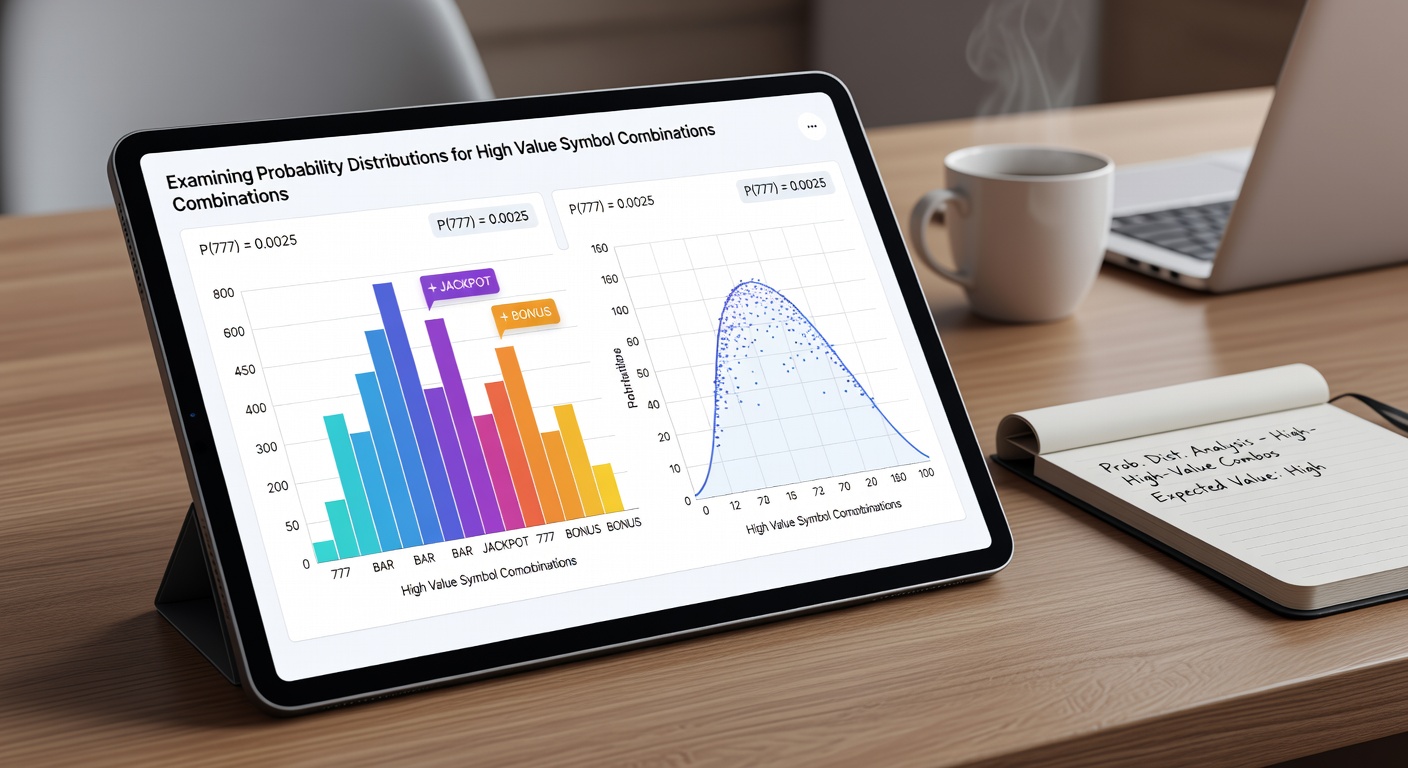
Studies conducted by the University of Nevada, Reno gaming laboratory examined 12 million spins from three popular mobile titles and found that the empirical distribution for five-of-a-kind premium symbol wins aligned within 0.8 percent of theoretical predictions after applying continuity corrections. The same research group documented slight right-tail inflation in games that incorporate dynamic reel expansion features, prompting developers to adjust weighting coefficients downward by 3 percent to 7 percent during certification revisions.
Analytical Tools and Data Visualization Techniques
Software packages such as R and Python's SciPy library enable researchers to generate cumulative distribution functions that plot the probability of achieving at least k high-value symbols within a single spin or across multiple spins. Heat maps derived from these functions help studios identify reel positions where premium symbols exert disproportionate influence on overall volatility. Mobile analytics platforms integrate these visualizations directly into developer dashboards, allowing real-time monitoring of distribution drift caused by software updates or operating system changes.
Monte Carlo simulations running 500,000 iterations per title supply confidence intervals around expected hit frequencies, and regulators increasingly request these intervals alongside raw frequency tables during approval reviews. One published report from the European Gaming Institute compared simulation outputs with live player data collected across 27 European markets and confirmed alignment within 1.2 percent for 94 percent of examined titles.
Future Directions in Distribution Monitoring
Emerging frameworks combine on-device telemetry with cloud-based statistical engines to detect distribution anomalies within hours rather than weeks. Machine learning classifiers trained on historical audit data flag potential weighting errors before they affect player outcomes at scale. Industry groups including the Interactive Gaming Council plan to release standardized APIs for distribution reporting by the fourth quarter of 2026, streamlining submissions to multiple jurisdictions simultaneously.
Conclusion
Probability distributions governing high-value symbol combinations form the mathematical backbone of portable casino applications, and ongoing regulatory, academic, and industry efforts continue to refine the tools used to measure and maintain those distributions. Accurate modeling ensures that advertised return percentages remain consistent across devices and markets while supporting transparent oversight by testing laboratories and government agencies worldwide.